
Blog
10 Travel Conversation Starters for Confident Speaking
Use these travel conversation starters for food, directions, local culture, and small talk, with dialogues and voice-practice prompts for real confidence.
A trip can change with a single question. Language learning helps bridge cultures, but speaking is the piece that turns stored vocabulary into a human connection. You don't need perfect grammar to begin. You need a useful opener, attentive listening, and the willingness to continue after the first answer.
Tourism research shows that early travel exchanges often depend on pragmatic repair, reformulation, and accommodation, not flawless sentences. In one study of tourists asking for directions, researchers identified 34 relevant conversations containing 806 pragmatic features, with discourse markers representing 41.9% of the observed strategies and hesitation markers 28.4% (Frontiers in Communication research). In other words, a pause, clarification question, or simple reformulation can keep a conversation alive.
The following travel conversation starters are organized by real situations. Each includes a short dialogue, a follow-up move, and a voice-practice prompt to help you move from memorized phrases to genuine exchange. Resources such as French phrases for real situations can help you prepare, while ChatPal gives you a voice-first way to rehearse realistic conversations with Nora and receive feedback on grammar, pronunciation, and phrasing. It's an accelerator, not a replacement for real conversations with people.
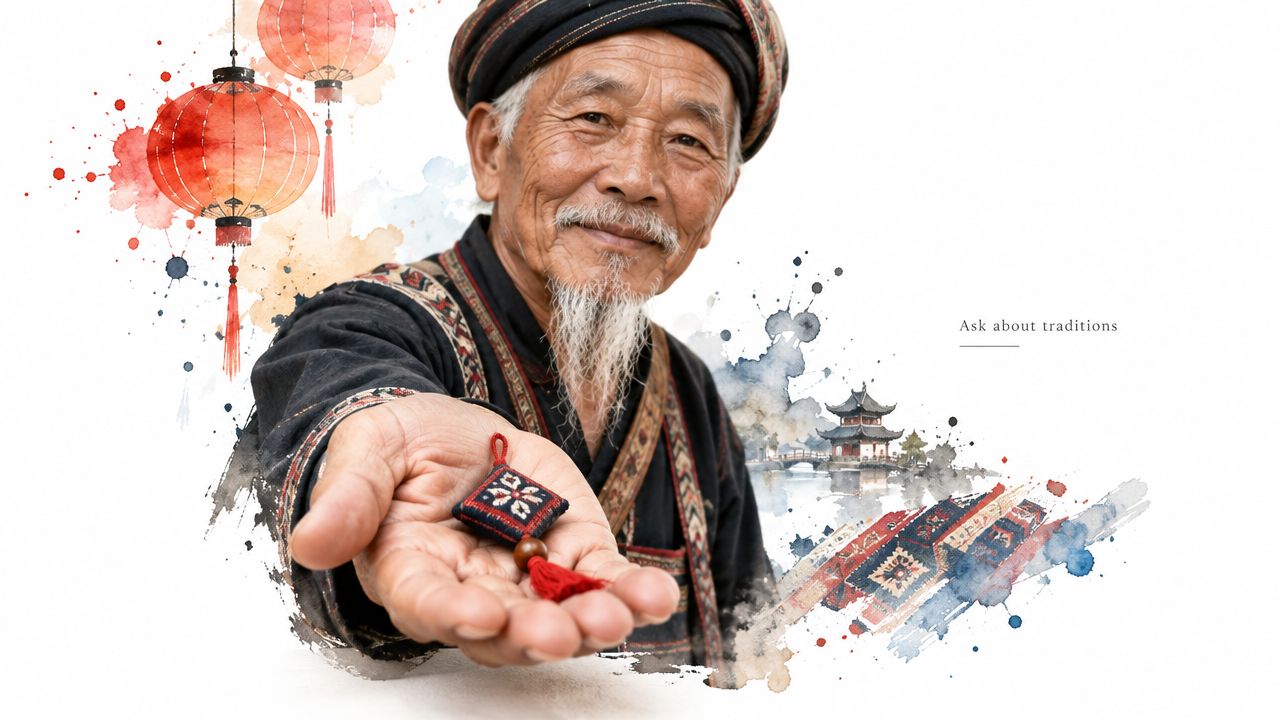
1. Asking About Local Customs and Traditions
Questions about customs invite people to share something meaningful about where they live. Instead of treating a destination as a collection of landmarks, you're asking how people celebrate, eat, dress, greet one another, or show respect. That shift can make a short exchange feel more personal.
Try an open question such as, “What's a tradition that's really important here?” or “What should I know about local etiquette?” A shopkeeper might explain a seasonal celebration, or a museum employee might tell you how visitors should behave at a cultural site.
Practical rule: Ask with curiosity, then leave space for the answer. A respectful conversation isn't an interview you need to control.
Sample dialogue
Traveler: “Is there an important festival in this region?”
Local: “Yes, the spring festival is very important to many families.”
Traveler: “What do people usually do during it?”
Local: “They visit relatives, share food, and attend events in the town center.”
Your follow-up should invite detail rather than confirm a fact. Ask, “Can visitors take part?”, “What food is associated with it?”, or “Is there anything I should avoid doing?” These questions show that you care about participating appropriately.
Before arriving, research a few cultural topics so you'll recognize important words and names. Practice their pronunciation aloud, especially if they're unfamiliar. You'll also benefit from rehearsing how to ask about dress codes, dining customs, greetings, and behavior at religious or historic sites. This guide to small talk can support that preparation.
Use this voice prompt: “Role-play a conversation with a local shopkeeper. I'm curious about a regional festival, and I need to ask respectful follow-up questions.”
A realistic practice session should include hesitation, an unfamiliar cultural term, and a moment where you ask the speaker to repeat or explain something. Those small recovery moves matter more than memorizing a long speech.
Here's a short video prompt to reinforce the cultural angle:
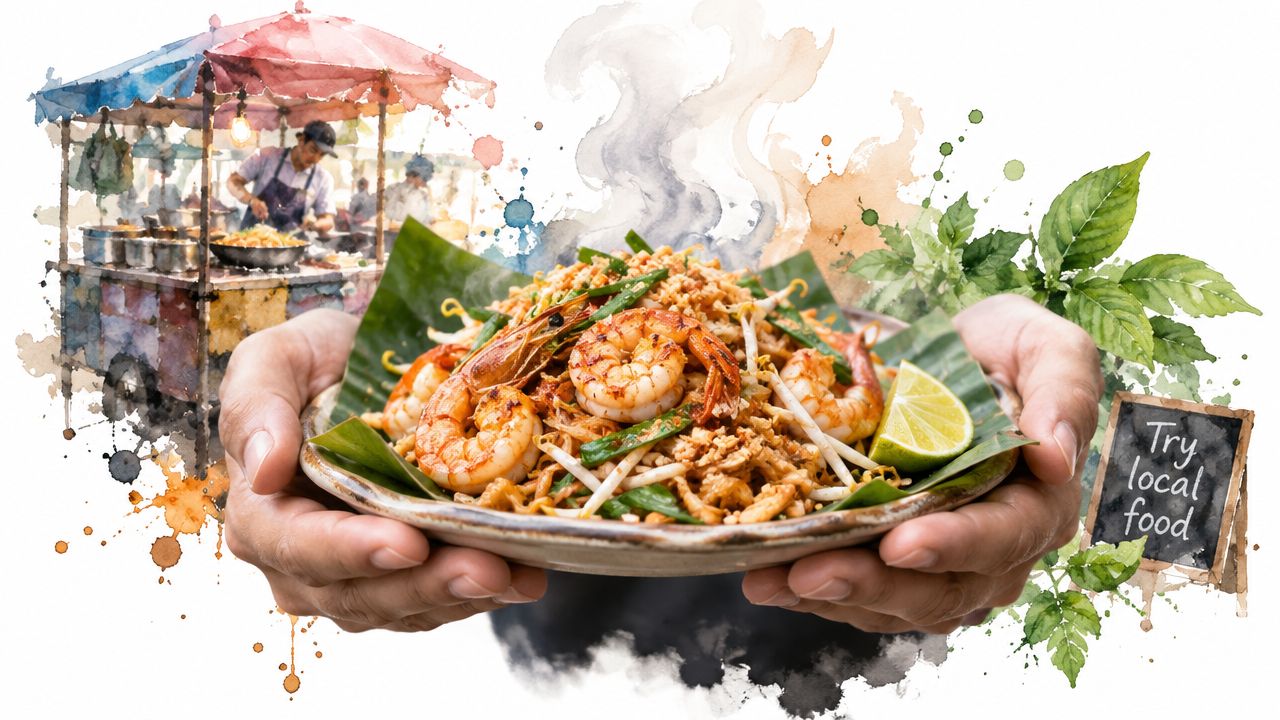
2. Food and Local Cuisine Discussions
Food gives you an easy reason to speak. You can ask for help, express a preference, compliment a dish, and learn something about family or regional traditions in the same conversation. A menu, market stall, or bakery creates useful context, so beginners don't need to invent a topic from nothing.
At a restaurant, ask, “Which local dish would you recommend?” At a market, point to an ingredient and ask, “What is this, and how is it usually used?” A stronger follow-up connects the answer to your own preferences.
Sample dialogue
Traveler: “What would you recommend that visitors sometimes miss?”
Server: “Try the regional stew. It's popular with local families.”
Traveler: “Does it contain anything spicy?”
Server: “It has some chili, but it isn't very hot.”
Traveler: “Great. I like mild food, so that sounds good.”
Learn basic food vocabulary before you travel, including words for texture, flavor, allergies, preparation, and quantity. You can practice ordering and describing preferences with a Spanish food-ordering dialogue, even if your destination uses another language, because the conversational pattern transfers well.
Follow-up moves that keep the exchange going
- Ask about preparation: “How is it cooked?”
- Connect it to culture: “Do families usually make this at home?”
- Request a local suggestion: “What street food should I try?”
- Respond naturally: “That sounds delicious. Is there a traditional way to eat it?”
A genuine compliment can open another turn, but make it specific. Say, “The herbs are wonderful,” or “I like the smoky flavor,” instead of offering a vague reaction. If you're unsure how to pronounce a dish, ask the server to say it slowly and repeat it back.
Use this voice prompt: “Role-play a market conversation. Help me ask what three ingredients are, how people use them, and which one is best for a beginner.”
3. Asking for Directions and Local Navigation Tips
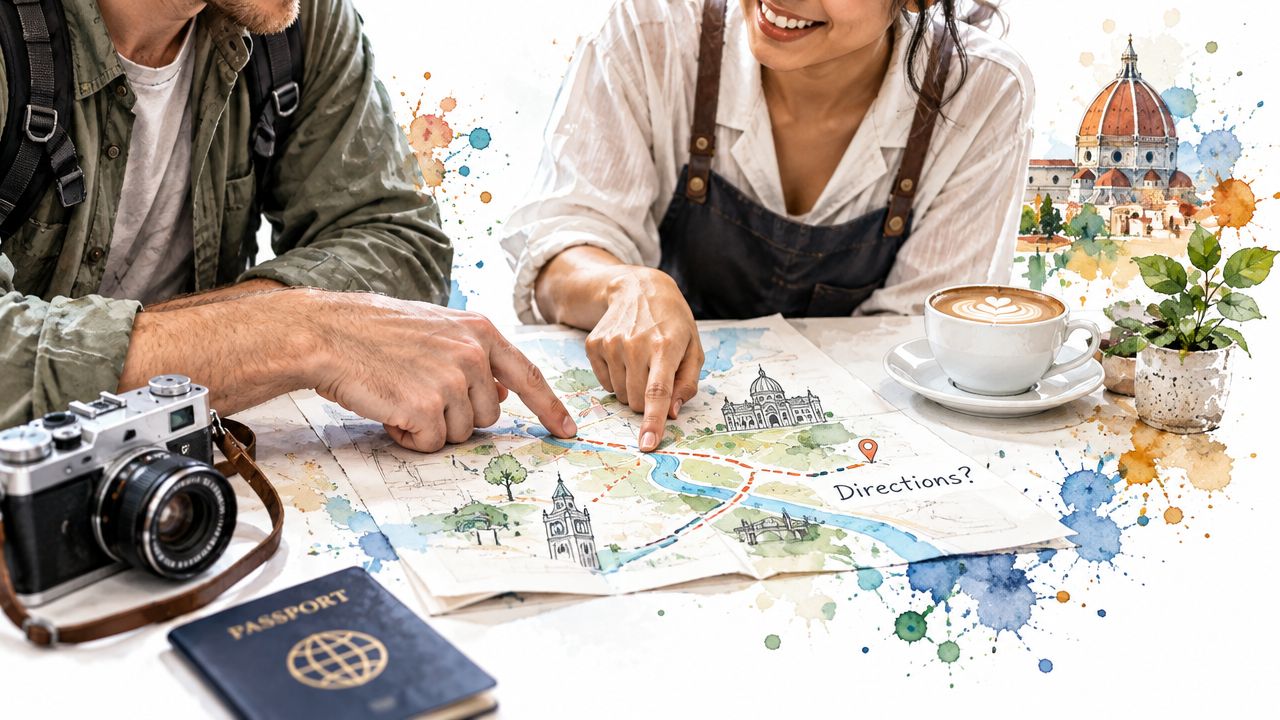
A request for directions can become a short lesson in local life. You have a practical goal, while the other person knows the streets, landmarks, and transport habits. Tourism interaction research has examined direction-giving exchanges, including how speakers use hesitation, reformulation, and conversational markers to keep meaning clear.
Begin with one direct question: “How do I get to the central station from here?” Listen for the route, then ask one follow-up about distance, timing, or local transport. This turns a memorized phrase into a useful exchange.
Traveler: “Excuse me, how do I get to the museum?”
Local: “Go straight, then turn left at the large square.”
Traveler: “Sorry, could you repeat the last part more slowly?”
Local: “Turn left at the square.”
Traveler: “Thank you. Is it easy to walk from there?”
Words such as left, right, straight, near, far, before, after, entrance, station, stop, and platform help you follow the route. Pay attention to landmarks, street names, and sequence words. If the instructions become unclear, restate them: “So I go straight first, then turn left?” This works like checking a map with words. It confirms the route and gives the other speaker a chance to correct you.
“A clarification question isn't a failure. It's how a conversation stays useful.”
Once the basic route is clear, invite local insight. Ask, “Is that the route most locals use?”, “Is there anything worth seeing on the way?”, or “Which neighborhood would you recommend exploring?” A navigation question can lead to cultural exchange because routes often reveal how residents experience their city.
Practice with Spanish directions conversation exercises, then repeat the same scene without reading. ChatPal can act as a patient speaking partner while you rehearse the move from a prepared phrase to a clarification question. Voice prompt: “Give me directions to a train station, but include one unfamiliar landmark. I'll repeat the route and ask you to correct my misunderstanding.”
4. Recommendations and Best Experiences to Have
A recommendation question gives another person room to express taste. The best exchanges don't stop at “What's the best restaurant?” They explore why someone likes a place, when to visit, and what makes the experience special.
Try this opener: “What's your favorite thing to do here that most tourists miss?” Then add your interest. A traveler who says, “I love hiking,” will receive more useful advice than someone who asks for a generic list.
Sample dialogue
Traveler: “Where would you eat if you only had one night here?”
Local: “I'd choose a small restaurant near the old market.”
Traveler: “Why is it your favorite?”
Local: “The food is traditional, and my family goes there.”
Traveler: “Would you go early, or is dinner usually late?”
That sequence moves from information to personal meaning. Follow-ups such as “What makes it special?”, “When's the best time to go?”, and “Do I need a reservation?” help you understand the recommendation and act on it.
- Share your preference: “I'm looking for something quiet.”
- Narrow the choice: “Is it good for a short visit?”
- Ask about timing: “Is morning better than afternoon?”
- Show engagement: “That sounds exactly like what I'm looking for.”
If you're planning routes alongside recommendations, Waymap's guide to free navigation may help with the practical side, but the conversation itself can reveal details an app won't provide. Locals can explain atmosphere, customs, and personal significance.
Use this voice prompt: “Role-play a local recommending an evening activity. I'll tell you that I enjoy art and quiet places, then ask why your suggestion matters to you.”

5. Weather and Seasonal Observations
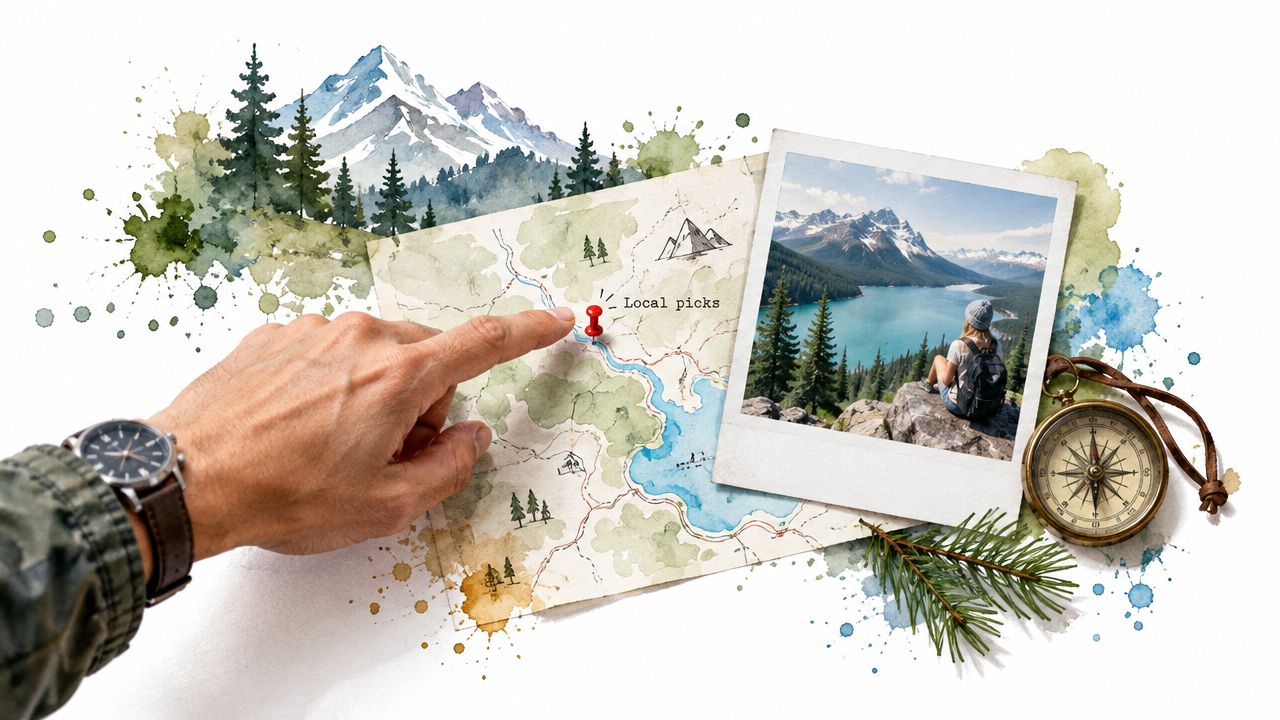
Weather is a reliable opener because you can comment on what's happening right now. “It's warmer than I expected today,” or “This rain came quickly,” is enough to begin. The useful learning step is the transition from observation to local knowledge.
Ask, “Is this typical for the season?” Then connect the answer to an activity: “So is now a good time to visit the coast?” or “What do people usually do on rainy days?” This keeps the exchange from becoming a dead-end comment about temperature.
Traveler: “Is this typical weather for spring?”
Local: “It's usually mild, but the mornings can be rainy.”
Traveler: “What do you recommend doing when it rains?”
Local: “The food market and museums are good options.”
Traveler: “Which market would you choose?”
Seasonal vocabulary can help you ask more precise questions about heat, humidity, wind, storms, sunshine, and clothing. You don't need to master every climate term. Prepare a few phrases that match your trip and practice moving from weather to plans.
Voice-practice prompt
“Start with a short conversation about unusual weather. Ask me what I want to do, recommend activities for the season, and wait for me to ask a follow-up question.”
Listen for how the other speaker describes local routines. Weather can affect transport, festivals, working hours, food, and outdoor life. A simple opener may therefore lead to a richer discussion about how the season shapes the destination.
6. Hobbies, Interests, and Leisure Activities
Hobbies reveal what people enjoy beyond work, schedules, and sightseeing. Ask “What do you like to do in your free time?” in a hostel common room, on a walking tour, or during a casual conversation with a local. The question works because it invites enthusiasm rather than a one-word fact.
Share something about yourself too. “I enjoy photography and long walks. What about you?” makes the exchange balanced and gives the other person a clear path into the conversation.
Traveler: “What do you like doing at the weekend?”
Local: “I play football with friends.”
Traveler: “Do you play in a club or just casually?”
Local: “Mostly casually, but there's a local match on Sunday.”
Traveler: “Would visitors be welcome to watch?”
A hobby conversation becomes more natural when you ask why the activity matters. Try “How did you start?”, “What do you enjoy most about it?”, or “Is there a local version I could try?” You may discover a community event, music venue, climbing area, craft market, or class that wasn't in your itinerary.
Practice vocabulary for your own interests before traveling. If you like cooking, learn how to describe ingredients and methods. If you enjoy running, prepare phrases about routes, distance, and timing. Speaking about familiar interests gives you a confidence base while you experiment with new language.
Listening practice: Don't prepare your next sentence while the other person is talking. Catch one detail, repeat it, and ask about it.
Use this voice prompt: “Meet me as a new friend at a café. Ask about my hobbies, respond to my answers, and suggest a local activity related to one interest.”
7. Travel Stories and Recommendations Exchange
Stories create momentum because they have a beginning, a change, and an outcome. You can ask another traveler, “Where have you been so far?”, or ask a local, “What place in the region has stayed with you?” The answer naturally gives you details to explore.
Prepare a few brief stories before your trip. They might describe a memorable meal, a difficult journey, a surprising misunderstanding, or a place that exceeded your expectations. Keep them short enough that the other person can respond, then invite their experience.
Sample dialogue
Traveler: “Have you visited anywhere interesting recently?”
Other traveler: “I spent a few days in the mountains.”
Traveler: “What was the best part?”
Other traveler: “The views were beautiful, but the journey was difficult.”
Traveler: “What made it difficult?”
Other traveler: “The buses were delayed, so we had to change our plan.”
You can then exchange recommendations: “Would you go back?”, “What would you do differently?”, or “Who would enjoy that place?” These questions help you practice past tense, description, opinion, and conditional language without turning the exchange into a grammar exercise.
For learners who understand more than they can say, learning Spanish through conversation offers a useful model for making speaking practice more central. ChatPal can also role-play a traveler who asks unexpected follow-ups, helping you move beyond a rehearsed story.
Use this voice prompt: “Ask me about a trip I took. Interrupt politely once to ask for clarification, then ask what I learned from the experience.”
A story doesn't need to be impressive. Honest details make it easier for another person to relate, compare experiences, and share something of their own.
8. Professional and Work-Related Discussions
Work conversations need clear control of tone. At a conference, “What brings you to this event?” sounds more open than immediately asking someone's job title. At a hotel, coworking space, or professional dinner, you can move from the event to industries, career paths, and workplace customs.
Traveler: “What brings you to this conference?”
Professional: “I'm here to learn about sustainable design.”
Traveler: “What kind of projects do you work on?”
Professional: “Mostly public buildings and community spaces.”
Traveler: “How does your team involve local communities?”
Prepare a concise professional introduction that includes your role, interests, and reason for traveling. You might say, “I work in marketing, and I'm interested in how companies communicate across cultures.” Keep the language simple and leave room for a question.
Useful professional follow-ups
- Explore expertise: “What part of your work do you enjoy most?”
- Ask about local practice: “How do companies here usually approach this?”
- Discuss development: “What skills are becoming more important in your field?”
- Check register: Use a more formal greeting in a business setting, then adapt if the other person becomes casual.
Avoid assuming that workplace customs transfer directly between countries. Ask rather than judge. “Is it common to exchange business cards here?” or “How are meetings usually organized?” can prevent an awkward moment and open a thoughtful discussion about professional culture.
Use this voice prompt: “Role-play a networking event. Ask about my work, challenge me with a follow-up about workplace culture, and correct my level of formality afterward.”
9. Learning and Educational Interests
Questions about learning reveal curiosity and shared goals. Ask a student, teacher, or fellow traveler, “Are you studying or learning anything while you travel?” You can also discuss language learning itself, which gives both speakers a familiar subject and a clear reason to support one another.
Sample dialogue
Traveler: “Are you learning anything new at the moment?”
Student: “I'm studying environmental science.”
Traveler: “What interested you in that subject?”
Student: “I want to work on coastal conservation.”
Traveler: “Are there opportunities to study that here?”
Share your own learning journey, even if it's still developing. “I'm learning the local language because I want to speak with people more comfortably,” invites the other person to explain their goals. You can ask about schools, public courses, libraries, workshops, or skills that people value in the region.
Educational questions can become too formal if they sound like an examination. Use a personal reason to soften them: “I'm curious because education is organized differently where I live. How does it work here?” Then listen for the speaker's perspective instead of searching for a direct comparison.
Practice vocabulary for subjects, motivation, progress, difficulty, and future plans. Rehearse answers to questions about why you're learning, what you find difficult, and how you practice. Speaking about these topics can also help you explain your needs to teachers, hosts, colleagues, and new friends.
Use this voice prompt: “Start a friendly conversation about language learning. Ask why I'm studying, what I find difficult, and what I hope to do with the language.”
Speaking practice supports a positive cycle. A conceptual review describes meaningful speaking practice as a process in which confidence encourages willingness to speak, while willingness creates more opportunities to practice (review of speaking practice and confidence).
10. Family, Relationships, and Personal Connections
Family and relationships can create warmth, but they require sensitivity. Begin with lighter questions such as “Are you traveling with family or friends?” or “Who are you visiting here?” If the other person answers briefly, respect that boundary and choose another topic.
Traveler: “Are you traveling with family or friends?”
Local: “I'm traveling with my sister.”
Traveler: “Is this a special trip for you both?”
Local: “Yes, we're celebrating her graduation.”
Traveler: “That's wonderful. Are there any family traditions for celebrations?”
You can ask where someone is from and what they miss about home, but avoid treating personal questions as an obligation. Offer something about yourself first: “I'm traveling with a friend, and we miss cooking at home. What food do you miss when you travel?” This makes the conversation reciprocal.
Gentle follow-up moves
- Ask about connection: “How do you stay in touch with people at home?”
- Explore traditions: “What does your family usually do for important occasions?”
- Share a parallel: “My family has a similar tradition.”
- Respect comfort: Change topics if the answer becomes shorter or more guarded.
Family vocabulary is especially useful for heritage speakers and returning learners who want to reconnect with a language through personal stories. Practice describing relationships, childhood memories, celebrations, and routines, but don't memorize intimate questions as a script. The goal is natural interest, not forced disclosure.
Use this voice prompt: “Role-play a respectful conversation with someone traveling with a sibling. Start with light questions and let me decide whether to ask about family traditions.”
Research on international tourism communication describes speakers converging toward English as a main interaction language and using short English phrases plus reformulation when misunderstandings arise (tourism discourse research). That pattern reinforces a practical lesson: a simple question, careful listening, and a patient repair move can create more connection than a complicated introduction.
10 Travel Conversation Starters Comparison
| Conversation Starter | Implementation complexity | Resource requirements | Expected outcomes | Ideal use cases | Key advantages |
|---|---|---|---|---|---|
| Asking About Local Customs and Traditions | Medium, needs cultural sensitivity | Pre-trip research, a few local phrases | Deeper cultural exchange, insider insights | Cultural sites, festivals, homestays | Builds respect, access to authentic experiences |
| Food and Local Cuisine Discussions | Low, easy to initiate | Basic food vocabulary, allergy notes | Recommendations, shared sensory experiences | Restaurants, markets, food tours | Universal topic, creates instant rapport |
| Asking for Directions and Local Navigation Tips | Low, practical and direct | Directional terms, map/app familiarity | Immediate navigation help, confidence | Streets, transit hubs, cafes | Solves real problems, low-pressure interaction |
| Recommendations and "Best" Experiences to Have | Low–Medium, open-ended | Ability to state interests and ask follow-ups | Tailored suggestions, storytelling, invitations | Hostels, cafes, local guides | Yields insider tips and enthusiastic responses |
| Weather and Seasonal Observations | Low, universal fallback | Minimal vocabulary, seasonal terms | Safe opener, leads to activity suggestions | Casual encounters, queues, transport | Low-risk, accessible to beginners |
| Hobbies, Interests, and Leisure Activities | Medium, requires rapport | Hobby-related vocabulary, willingness to share | Passionate dialogue, shared activities | Social events, clubs, informal meetups | Reveals personality, fosters lasting rapport |
| Travel Stories and Recommendations Exchange | Medium, narrative skills helpful | Past-tense grammar, prepared anecdotes | Reciprocal storytelling, practical tips | Hostels, travel meetups, long journeys | Builds fluency, strong peer connection |
| Professional and Work-Related Discussions | High, formal register often needed | Industry vocabulary, polished intro | Networking, career opportunities, insights | Conferences, business events, co-working | Leads to professional relationships and resources |
| Learning and Educational Interests | Medium, intellectually focused | Academic/learning vocabulary, examples | Deep dialogue, resource sharing, mentorship | Language exchanges, workshops, campuses | Engages curious learners, uncovers local resources |
| Family, Relationships, and Personal Connections | Medium, requires sensitivity | Family-relationship vocabulary, tact | Emotional connection, potential long-term friendships | Home visits, extended stays, personal conversations | Creates deep rapport, reveals cultural values |
Turn Useful Phrases Into Real Connection
A travel conversation starter only becomes useful when it helps you take another turn. Choose one situation, say the opener aloud, add one follow-up question, listen for the answer, and reflect on a clearer way to respond. This loop works at a market, station, café, conference, museum, or family gathering because it trains the exact transition that beginners often avoid, moving from a prepared sentence into an unpredictable exchange.
Start with one scenario rather than trying to memorize all ten. If food is your priority, practice asking for a recommendation, checking an ingredient, and responding to the answer. If navigation worries you, rehearse asking for directions, repeating the route, and requesting clarification. If you're preparing for a cultural visit, focus on etiquette questions and respectful reactions.
Speaking anxiety often grows when learners judge every pause as evidence that they aren't ready. Speaking research supports a different interpretation. A study of native-speaker practice reported statistically significant gains in fluency and confidence, with the group practicing weekly with native speakers improving more than the control group using traditional peer activities (study on native-speaker speaking practice). The value isn't limited to a particular app or classroom. Regular interaction gives your brain more chances to retrieve language under real conditions.
Confidence also affects whether learners take risks, participate in communicative tasks, and persist through difficulty (study of self-confidence among EFL learners). That's why your practice should include imperfect answers, interruptions, unfamiliar words, and moments of repair. Say “Could you repeat that?”, “Do you mean…?”, or “I'm not sure I understood, but are you saying…?” until those phrases feel available under pressure.
Active listening turns a language exchange into cultural connection. Notice what the person values, not just the vocabulary they use. Ask why a dish matters, why a place is special, how a celebration works, or what someone misses from home. Language learning becomes a positive force when it helps people meet with more patience and fewer assumptions, while speaking provides the part of that process that silent study can't deliver.
ChatPal can accelerate the routine through voice-based role-play with Nora. You can practice travel scenarios, speak aloud in a low-pressure setting, and review feedback on grammar, pronunciation, and phrasing after a session. The app is designed primarily for beginner and intermediate learners who know the basics but feel stuck when they need to use the language, and it supports languages including Spanish, Italian, French, Portuguese, Hindi, and English. A Spanish phrase guide for safe journey wishes can complement that preparation with practical expressions for a specific trip.
Choose one starter today, record yourself saying it, and add one follow-up without reading. Then use the same opener in a real conversation when the opportunity appears. You don't need to sound perfect to begin. You need to begin often enough that speaking starts to feel like part of traveling, not a test you must pass.
Use ChatPal to rehearse realistic travel conversations aloud with Nora, from ordering food and asking for directions to making small talk with locals. Start the free 7-day trial, practice one scenario, and use the post-session feedback on grammar, pronunciation, and phrasing to prepare for your next real exchange.