Blog
Best App for Speaking Practice in 2026: 7 Top Picks
Find the best app for speaking practice with our 7 picks by learner level, from voice-first AI partners to live tutors and language exchanges.
Speaking becomes the bridge that turns language study into real human connection. A large share of university freshmen in one classroom study said they didn't feel confident speaking English, and repeated oral practice was associated with much higher confidence by the end of the term, which is exactly why the best app for speaking practice has to do more than teach vocabulary, it has to get people talking aloud in a way that feels usable in daily life study on speaking confidence. That matters because conversation is where cultures stop being abstract and become personal, whether that's a meal, a work call, or a trip abroad. For a quick visual angle on turning a script into spoken media, see turn a script into a video.
This list sorts seven tools by the speaking gap they close, not by hype. Some learners need an AI partner to lower the pressure, others need a live tutor, a peer exchange, or pronunciation coaching. The right setup is often two or three tools used together, especially for beginner and intermediate learners who already know some language but still freeze when it's time to speak.
1. ChatPal
ChatPal fits learners who need low-pressure, voice-first conversation before they are ready for the unpredictability of real people. It is built around speaking out loud with Nora in realistic scenarios, so the practice feels like using the language instead of studying it. Repeated oral participation is what classroom research on speaking confidence points to, and ChatPal is built around exactly that.
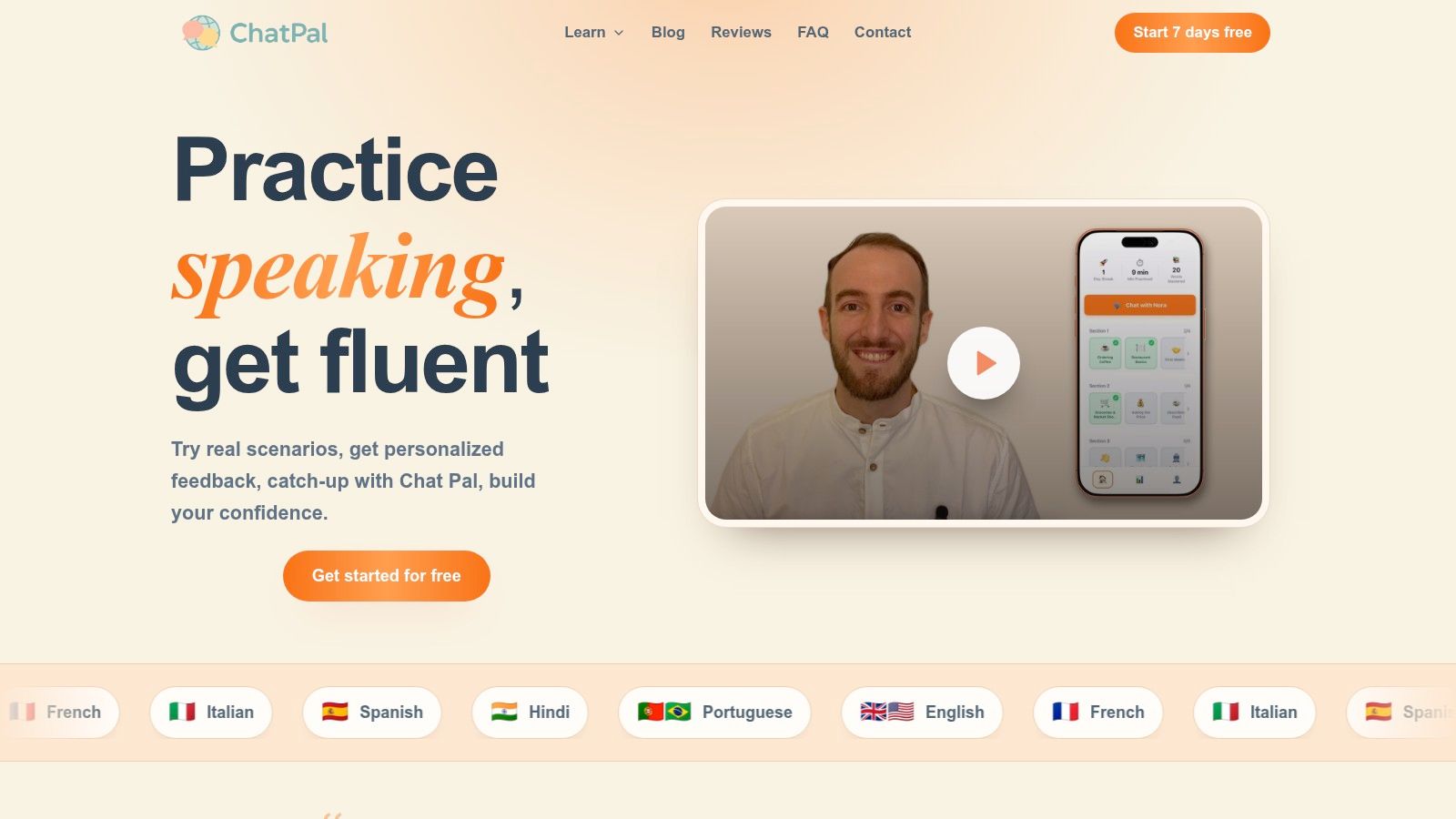
What makes ChatPal stand out is the feedback loop. After each session, it gives a recap that highlights grammar, pronunciation, and phrasing, which is the kind of structure nervous speakers need if they are going to improve week after week instead of having one decent chat and stalling. The product also fits beginner and intermediate learners who want everyday topics, travel practice, work situations, or a food-ordering roleplay before a trip.
Practical rule: use ChatPal when the problem is hesitation, not just knowledge. If you can read the language but cannot get sentences out smoothly, a guided AI conversation can build momentum faster than passive study.
It is especially appealing for travelers, expats, heritage speakers, and students who need a bridge between classes and real conversations. ChatPal offers a free 7-day trial, then moves to paid access, so it works best as a daily speaking habit rather than a one-off experiment. For Spanish learners specifically, this practice guide fits naturally alongside ChatPal sessions.
Best for: beginner to intermediate learners, returning speakers, travelers, and anyone building confidence before live conversation.
Weak point: it is not a true substitute for human interaction, and complete beginners may need extra support at the start.
Website: chatpal.chat
2. italki
italki fits learners whose main gap is accountability. A live tutor can notice the phrases you keep recycling, push you past safe answers, and shape each lesson around conversation, interview prep, or business speaking. The platform's value is choice, with a large pool of teachers and community tutors across time zones, so you can keep a live speaking habit going instead of stopping after a good week.
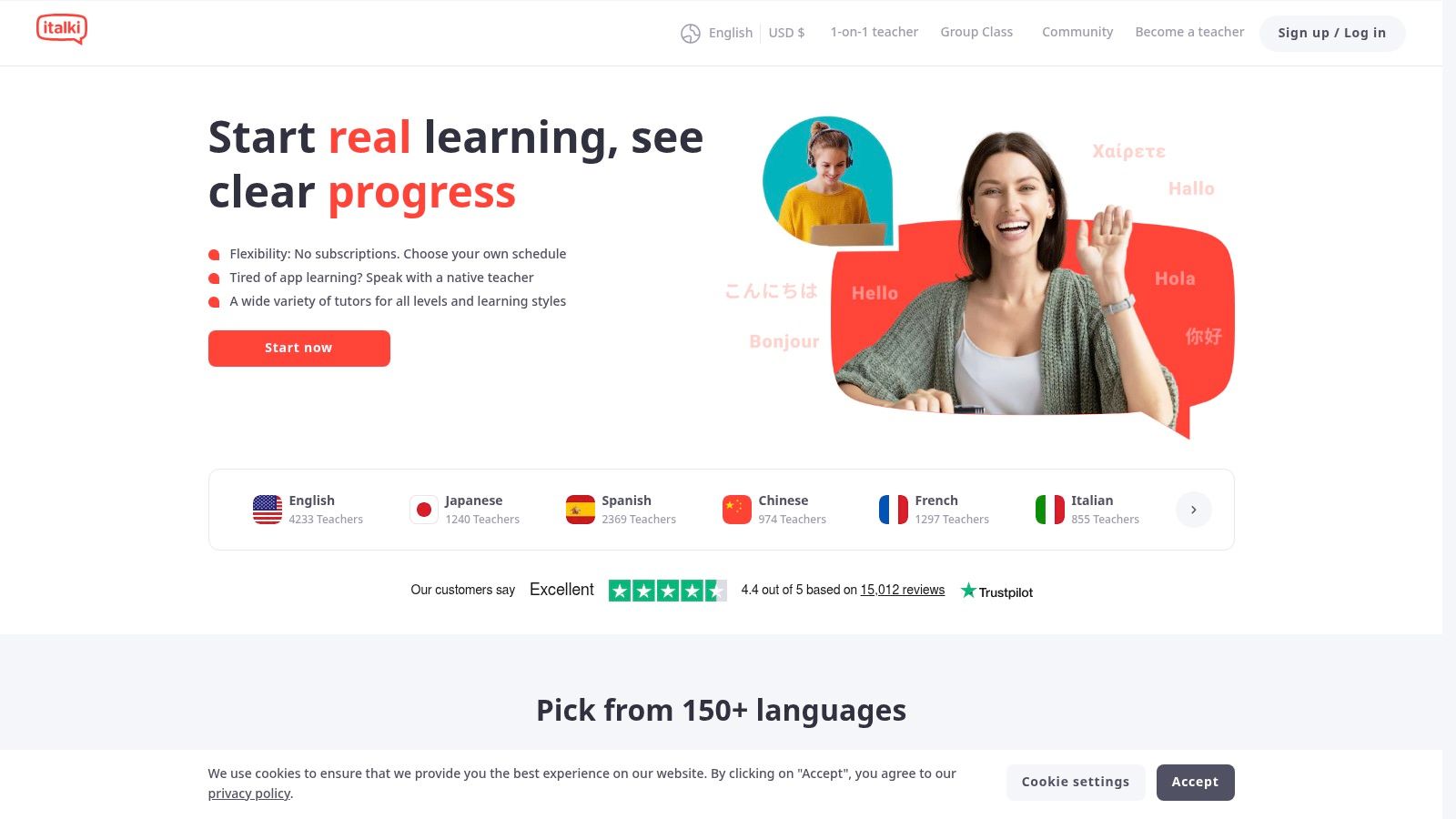
That choice matters in practice. You can test a few tutors, book trial lessons, and settle into the format that matches your level, from casual conversation to pronunciation correction or exam-style speaking. It works especially well for intermediate learners who can already keep a lesson going but need a person in the room to stop them from coasting.
Where it wins and where it doesn't
- Strong personalization: choose the tutor, topic, pace, and schedule that fit your routine.
- Flexible formats: use it for conversation, test prep, interview practice, or targeted correction.
- Cost can rise quickly: regular live lessons add up if you want several per week.
- Tutor fit matters: the right teacher can speed up progress, the wrong one can drain your energy.
Live tutoring works best when you show up with a specific problem, not a vague wish to “speak better.”
italki pairs well with a speaking app such as ChatPal or with pronunciation coaching. A solo AI practice block can warm you up, then a tutor session can pressure-test what you have built. For Spanish learners who want a focused speaking routine, a step-by-step Spanish speaking practice routine is a useful companion read.
Best for: intermediate learners, exam candidates, professionals, and anyone who wants structured live accountability.
Weak point: quality varies by tutor, and the recurring cost can become the main limiting factor.
Website: italki.com
3. Cambly
Cambly is built for one thing, getting you talking to a real person quickly. That makes it a strong choice for learners who stall because scheduling feels like friction, or because they need a short, frequent practice block rather than a formal lesson. Its English-only focus is a limitation, but for people learning English, the low barrier to instant conversation is the main draw.
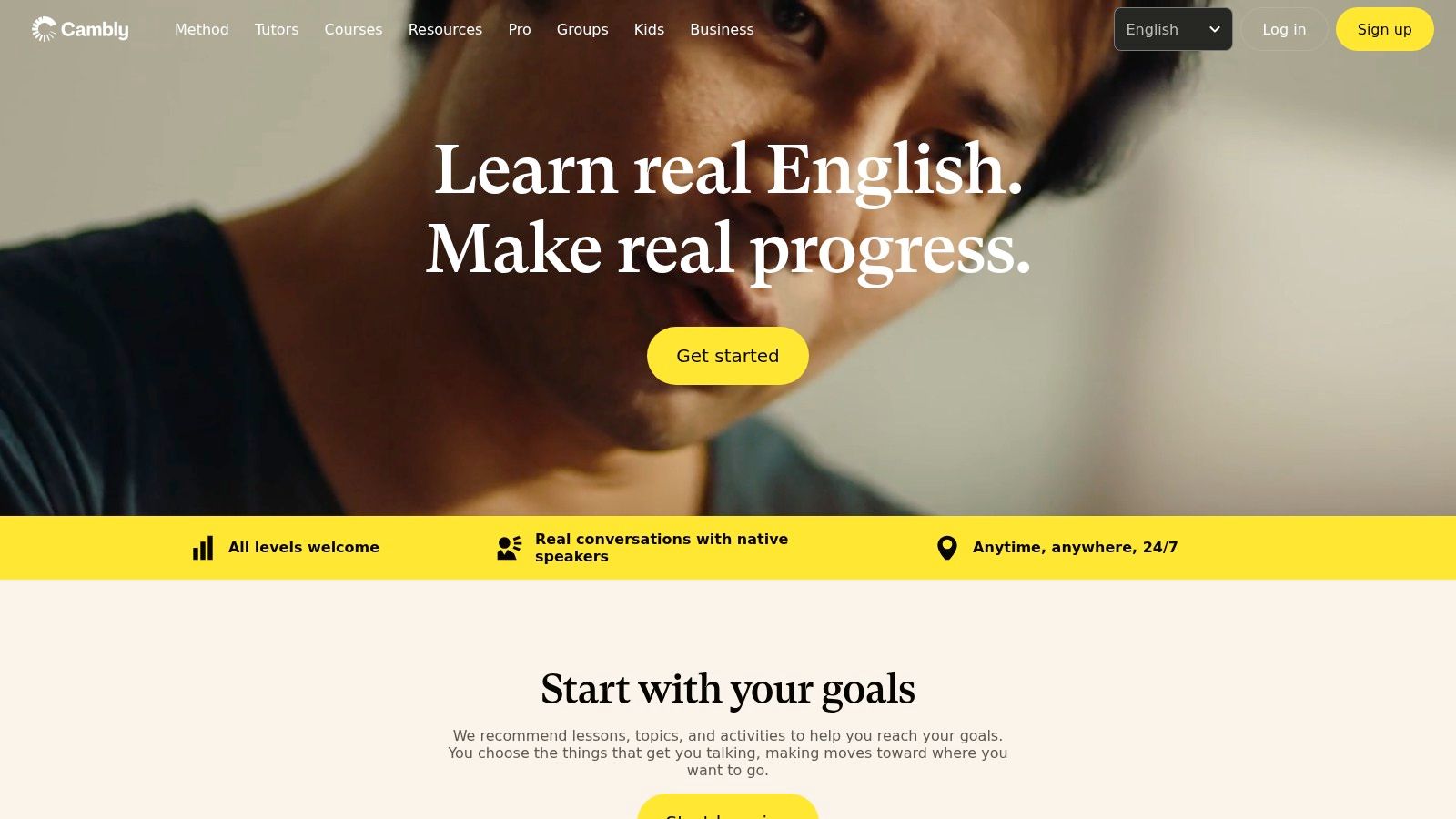
The practical value of Cambly is rhythm. Weekly minutes and lesson lengths make it easier to build a habit around short, repeatable calls instead of waiting for the perfect free hour that never comes. You can join instantly or book ahead, which gives shy speakers two routes into the same habit, immediate reps when motivation is high, and scheduled reps when they need structure.
Best fit for English learners who need repetition
Cambly suits learners who want:
- Fast access to tutors without long planning.
- Short speaking blocks that are easier to repeat.
- Different accents and backgrounds to widen listening exposure.
- A simple habit loop rather than a broad multi-language platform.
The downside is that the plan structure can feel confusing at first, especially if you're trying to compare weekly minutes, daily limits, and extra minutes. It's also not the right choice if you want pronunciation-specific drilling or a multi-language experience.
If fear of mistakes is the blocker here, this kind of live practice is often the point where learners discover that speaking fear drops only after repeated exposure. This note on making mistakes pairs well with that mindset.
Best for: English learners who want frequent, real-person speaking without a lot of setup.
Weak point: English-only, and the plan mechanics can take a minute to understand.
Website: cambly.com
4. Tandem
Tandem is the best fit when the missing piece is peer interaction, not lessons. It connects you with native speakers for chats, voice notes, and calls, which is useful if you want informal practice, slang exposure, and the feel of real back-and-forth without paying for every conversation. That kind of exchange helps learners move from textbook language to social language.
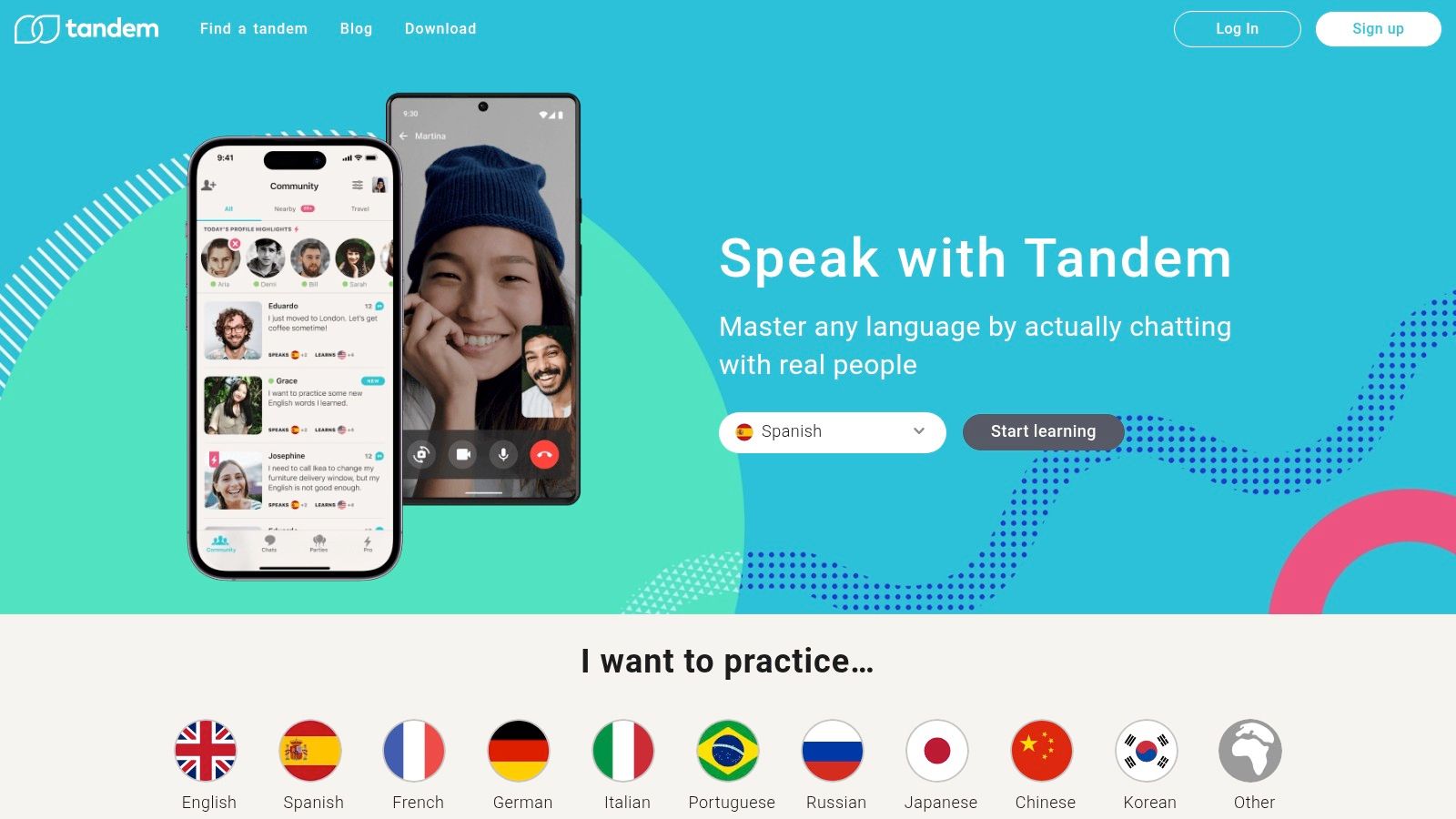
The biggest strength here is flexibility. You can start with text, move to voice messages, then graduate to calls when the connection feels natural. That pacing works well for intermediate learners who don't need a teacher at every turn, but do need a real person to make the language feel alive.
Peer exchanges work best when you bring a topic. Without one, chats drift, and the practice turns into small talk with no learning value.
That's the trade-off. Tandem can be brilliant for cultural context and casual fluency, but partner reliability varies, and you'll need enough discipline to keep the conversation tied to language goals. A strong routine might mean a few Tandem chats each week, plus targeted AI practice elsewhere to stabilize what comes up in conversation.
If you want a practical model for solo practice that still feels social later, this guide on speaking Italian without a partner lines up with Tandem's strengths.
Best for: intermediate learners, social speakers, and anyone who wants real accents and informal language.
Weak point: less structured than paid tutoring, so results depend on how you use it.
Website: tandem.net
5. HelloTalk
HelloTalk is a good choice for learners who want lightweight, frequent contact with native speakers. It combines text, voice notes, calls, translations, and corrections, so you can keep the exchange moving even when you don't fully understand everything yet. That makes it especially useful for confidence building, because the app lowers the cost of making a mistake.
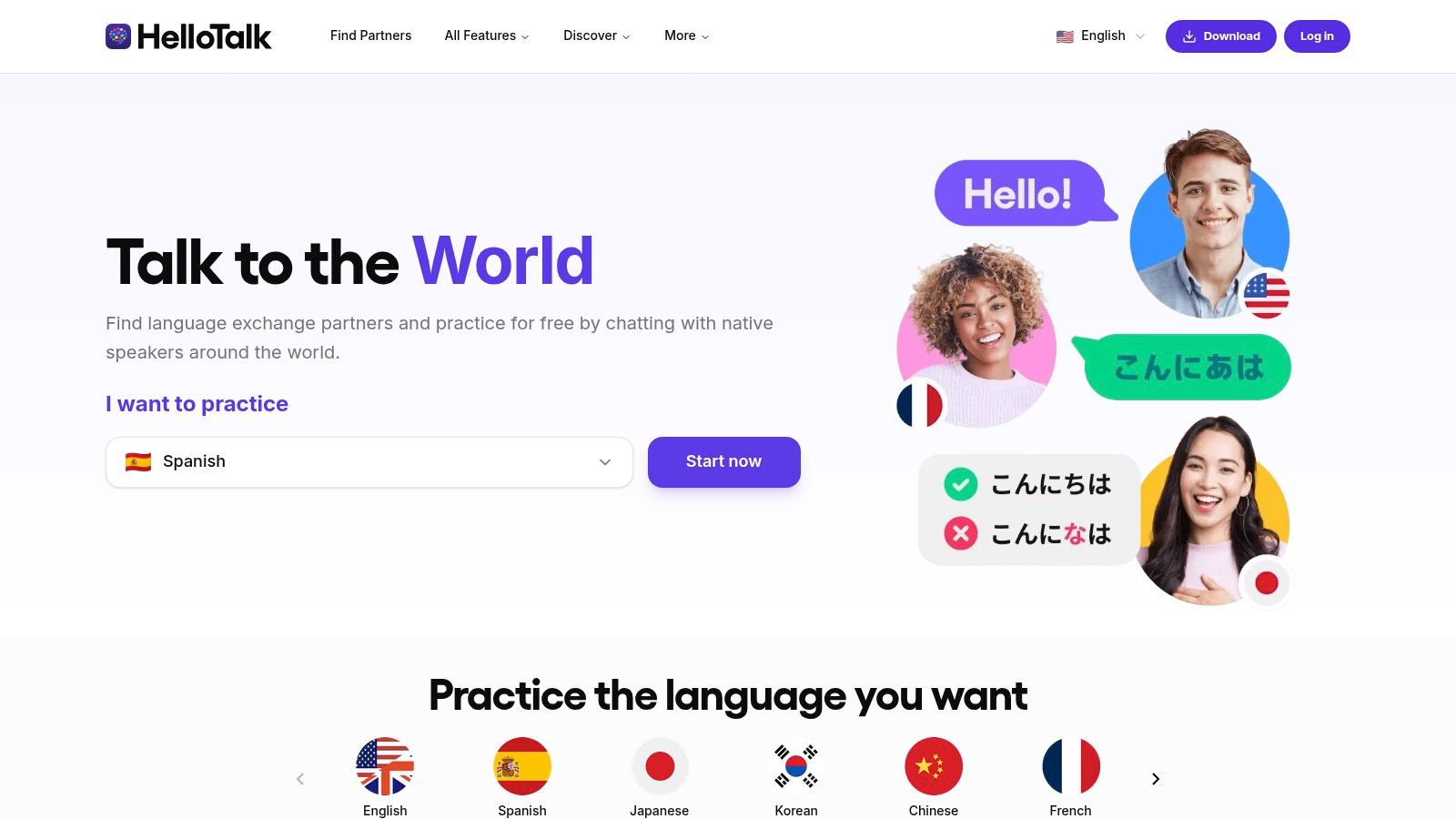
The free tier is enough for many learners to start speaking, which is part of its appeal. You can test conversations, get correction help, and use the app as a daily touchpoint rather than a formal class. For people who feel intimidated by scheduled lessons, that ease of entry matters.
What HelloTalk does well
- Fast access to native speakers for everyday practice.
- Built-in correction tools that help you keep conversations on track.
- Flexible formats from text to voice and video.
- Low-pressure use that supports short, frequent sessions.
The main caution is that conversations can drift. If you don't steer the exchange, you'll end up chatting socially without doing much deliberate practice. It's best for learners who can self-direct and who want to normalize speaking before moving into more formal speaking environments.
HelloTalk works especially well as a companion to one more structured tool. Use it for quick exposure and human contact, then use ChatPal, a tutor, or pronunciation coaching to clean up recurring errors and build better habits.
Best for: learners who want frequent, casual speaking practice with native speakers.
Weak point: it needs self-discipline, or it becomes a chat app instead of a study tool.
Website: hellotalk.com
6. Speechling
Speechling fits learners whose main problem is how they sound, not whether they can keep a conversation going. It lets you record sentences or free speech and receive targeted feedback from human coaches, which is more useful than automated scoring when pronunciation, rhythm, or phrasing keeps getting in the way. For learners who need a clear, repeatable feedback loop, that matters.
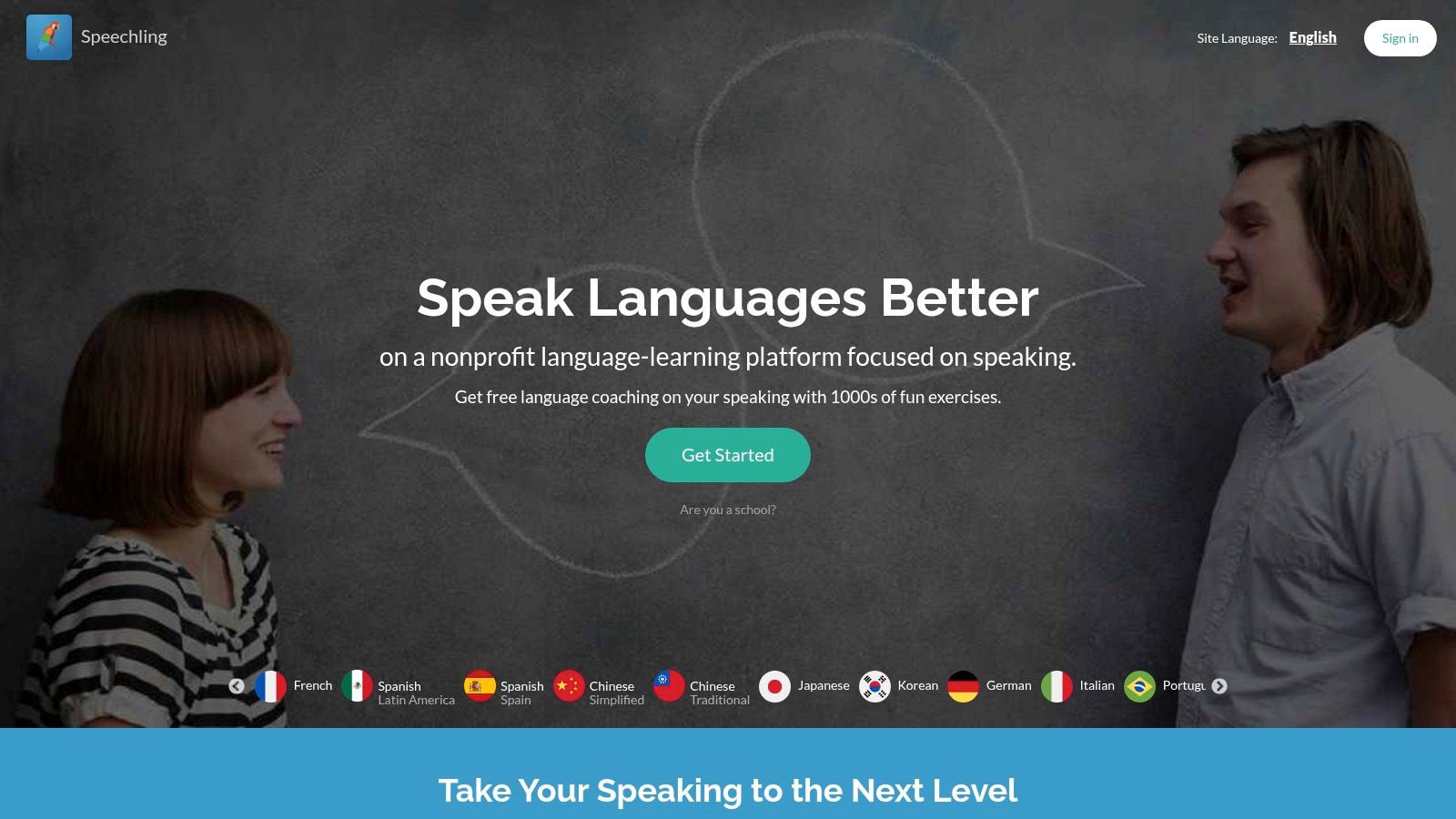
The platform works well for short daily practice. You can use small blocks, compare your recording with native audio, and focus on one issue at a time instead of trying to fix everything in a live conversation. That makes it a strong fit for intermediate learners who already speak, but know they sound unclear or unnatural.
Pronunciation coaching works best when the correction is specific. If a tool shows the exact phrase, rhythm, or sound that needs work, the fix is easier to reuse in live speech.
Speechling is not a live conversation platform, and that is the trade-off. It is a form tool, not a social tool. Use it when clarity is holding you back, then move that cleaner speech into a live app or tutor session so the improvement shows up in conversation.
Best for: learners who need precise pronunciation and phrasing correction.
Weak point: it does not replace live interaction, so it works best as a companion tool.
Website: speechling.com
7. ELSA Speak
ELSA Speak fits learners who already know the sentence they want, but still trip over individual sounds, stress, or intonation. It focuses on English pronunciation at a fine level, so the feedback is immediate and specific. For learners who want cleaner articulation and more control, that narrow focus is useful.
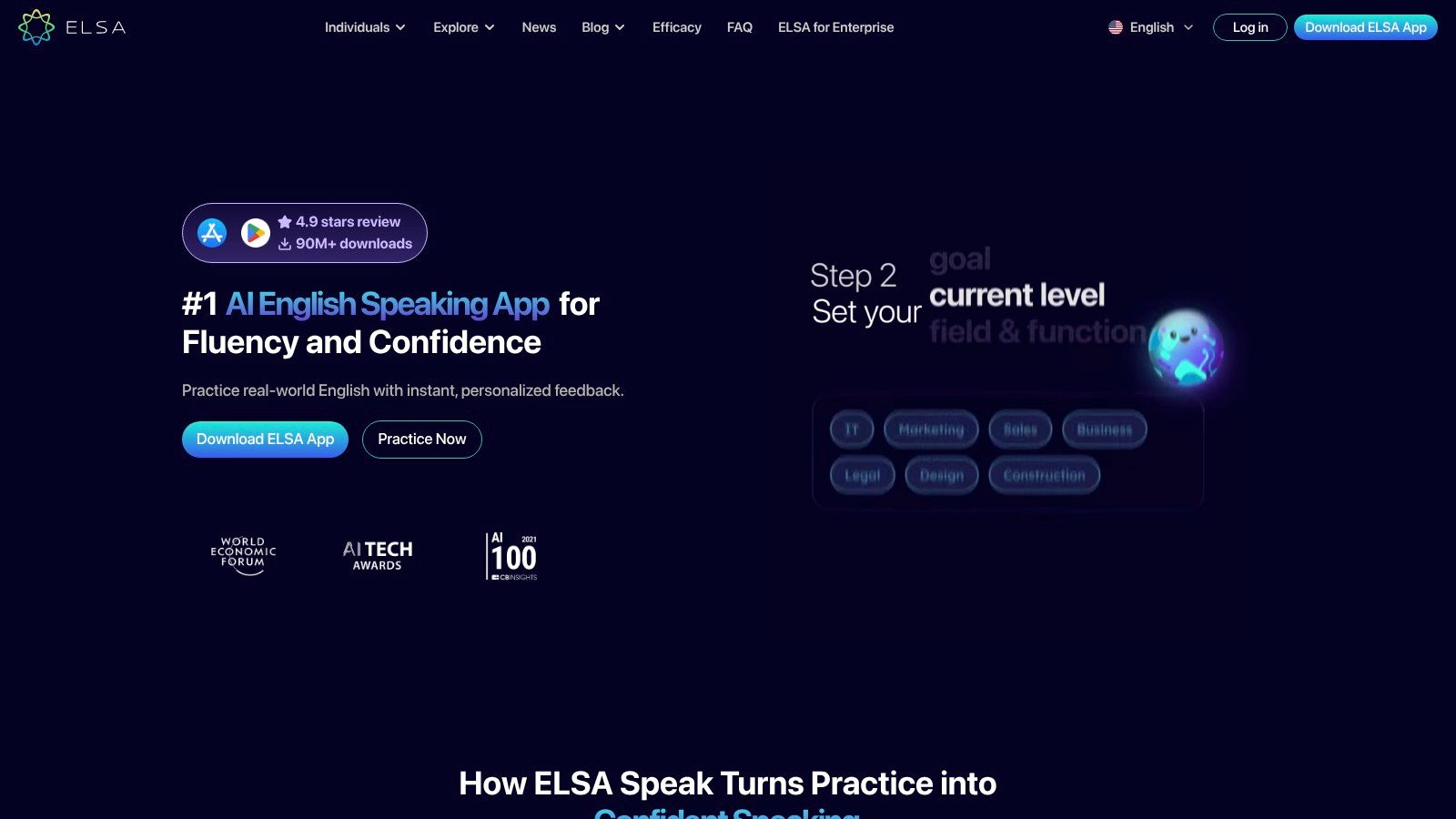
The speed is the main advantage. You can repeat one phrase, hear what needs work, and try again without waiting for a tutor to respond. That makes it a practical choice for short practice windows, especially before a meeting, presentation, or exam.
ELSA is strongest when you want to clean up one recurring problem:
- Immediate correction: useful for fast repetition.
- English-only focus: narrow, but detailed.
- Scenario practice: helps move beyond isolated sounds.
- Accent options: useful if you want exposure to different English varieties.
The trade-off is simple. It trains pronunciation, not live conversation. Used alone, it can make your speech clearer without making you more spontaneous. It works best after AI conversations, tutor sessions, or peer exchanges, when you already have something to say and need to make it sound sharper.
For learners comparing pronunciation tools, ways to improve pronunciation is a useful companion read. ELSA also sits alongside multilingual speech recognition on desktop, since both depend on hearing speech accurately before they can correct it. ELSA polishes how you sound. The earlier tools in this list cover whether you can keep speaking at all.
Best for: English learners who need pronunciation, stress, and intonation correction.
Weak point: English-only, and it does not rehearse live conversation.
Website: elsaspeak.com
Top 7 Speaking Practice Apps Comparison
| Product | Implementation complexity | Resource requirements | Expected outcomes | Ideal use cases | Key advantages |
|---|---|---|---|---|---|
| ChatPal | Low, voice-first, minimal setup | Free 7‑day trial then subscription; smartphone mic | Better conversational fluency, pronunciation and phrasing with session recaps | Beginner→intermediate learners, travelers, oral exam prep, tutor complement | Realistic AI dialogues with actionable post-session recaps; habit-friendly |
| italki | Medium, choose and coordinate tutors | Pay-per-lesson (varied rates); video setup | Personalized progress aligned to goals (conversation, test, business) | Learners needing tailored 1:1 instruction and accountability | Massive tutor marketplace, flexible pricing and formats |
| Cambly | Low, instant join or schedule | Subscription by minutes/week; internet/video | Increased speaking frequency, confidence and fluency | English learners wanting on-demand, frequent practice | Instant access to tutors, habit-friendly time blocks |
| Tandem | Low, match with partners and start chatting | Mostly free; optional Pro subscription; smartphone | Improved informal conversation, cultural exposure, listening skills | Casual language exchange, cultural learning, practice across many languages | Free peer exchange, many languages, flexible communication formats |
| HelloTalk | Low, chat, voice notes and calls with natives | Free tier with optional VIP; smartphone | Bite-sized speaking practice, practical phrases, informal corrections | Daily lightweight practice, slang and cultural context | In-app translation and correction tools, large user base |
| Speechling | Medium, record submissions and receive feedback | Free tier; paid unlimited for more submissions; internet | Targeted pronunciation, rhythm and phrasing improvements | Focused pronunciation work and complement to live practice | Human coach audio feedback and native comparison for imitation |
| ELSA Speak | Low–Medium, follow AI drills and pathways | 7‑day trial then subscription; smartphone; English-only | Precise phoneme-level pronunciation and fluency gains | English pronunciation training, accent reduction, short daily drills | Real-time AI phoneme feedback, personalized pathways and drills |
Turning Practice Into Conversations That Connect
The smartest way to choose the best app for speaking practice is to match the tool to the gap, then combine it with one more layer of support. If you freeze before speaking, start with ChatPal or a peer exchange app. If you need human pressure and accountability, add italki or Cambly. If pronunciation is the main problem, keep Speechling or ELSA Speak in the mix.
Language learning matters because it opens practical, human doors. The European Commission reported that 45% of people in one large EU survey said understanding other cultures motivates them to learn languages, while many also pointed to holidays and job opportunities, which shows how speaking connects curiosity, work, and daily life European Commission survey on languages. Speaking is the part that brings that value to life, because it turns knowledge into exchange. It lets you ask questions, clarify meaning, and participate in someone else's world.
The best routine is simple. Pick one tool for daily reps, one for live conversation, and one for feedback, then repeat the same speaking scenarios for four weeks. If you want a voice-first place to start, ChatPal gives you realistic conversation practice with recaps that help mistakes turn into progress, which makes it a strong base for beginners, returning learners, travelers, and anyone rebuilding speaking confidence.
ChatPal gives you voice-first practice with Nora, realistic speaking scenarios, and clear session recaps that make improvement visible. It's built for beginner and intermediate learners who want to turn passive knowledge into real conversation, especially when confidence is the missing piece. If that's the gap you're trying to close, visit ChatPal and start speaking today.